Few bands carry a legacy quite like American Football – one that hinges as much on absence as output. The Champaign-Urbana, Ill.,-reared band’s self-titled 1999 debut became a touchstone of emo-leaning American indie rock through a slow, almost accidental canonization, greatly enhanced by the fact that American Football broke up shortly after its release (the Urbana house on the cover has become arguably as well-known as the music thereon; band members purchased it in 2023 and now rent it on Airbnb).
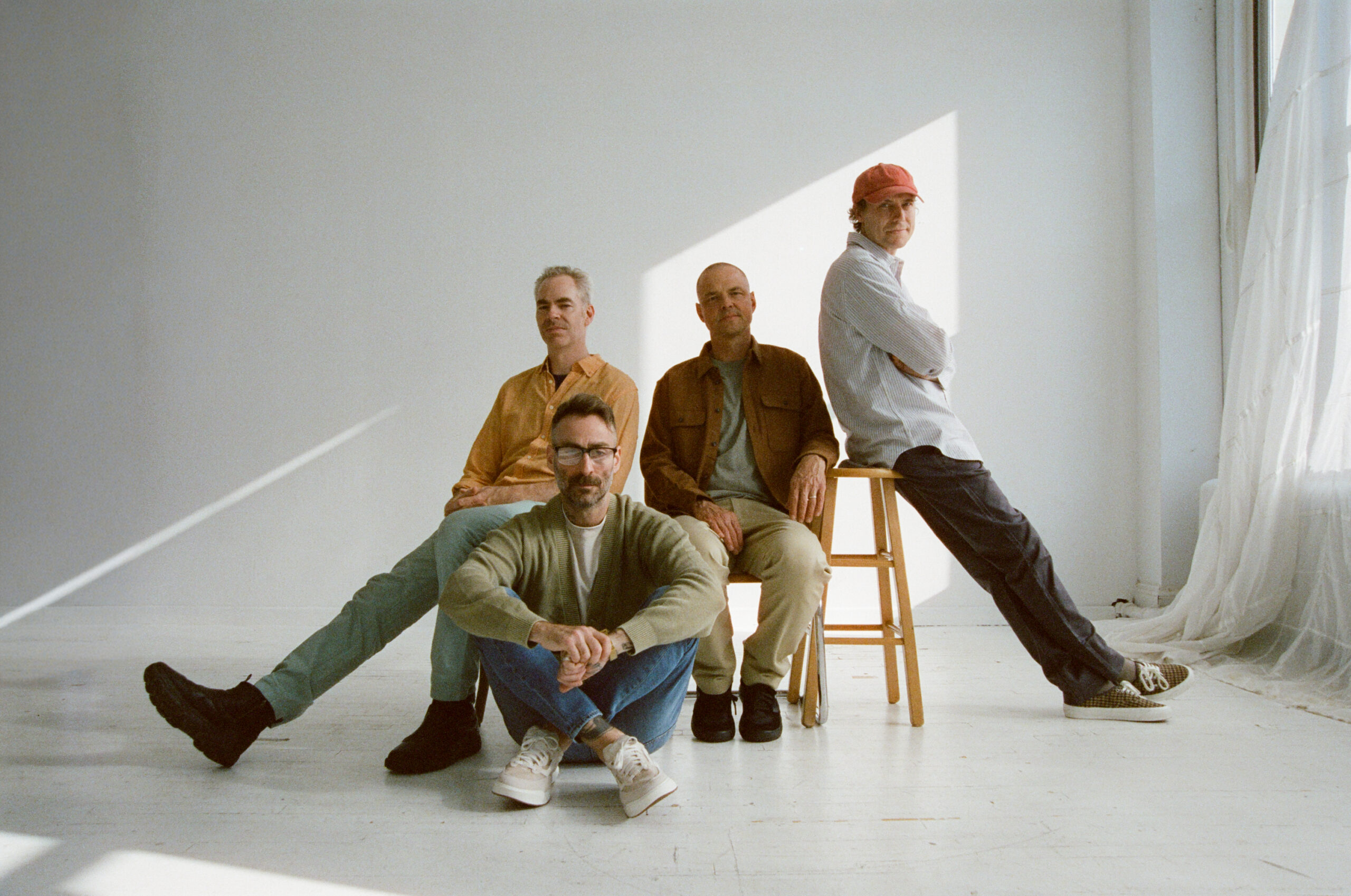
When the trio of vocalist/guitarist Mike Kinsella, guitarist Steve Holmes and drummer Steve Lamos reconvened in 2014 with Kinsella’s cousin Nate joining on bass, they weren’t just reviving a dormant project – they were stepping back into something that had grown far beyond them, with a devoted audience projecting years of meaning onto a remarkably small body of work.
Mike and his older brother Tim were already Midwest scene heroes long before American Football took the field thanks to their wonderfully chaotic, short-lived but influential teenage band Cap’n Jazz, which split in 1995 and eventually spawned new groups such as Tim’s Joan of Arc, the Promise Ring and Ghosts & Vodka. In the years following American Football’s initial dissolution, Mike Kinsella remained prolific as well, channeling different facets of his songwriting into projects like OWLS and his long-running solo outlet Owen.
But there was clearly unfinished business with American Football, whose self-titled post-reunion albums in 2016 and 2019 nudged the band far past the narrow framework of its origins, both sonically and emotionally. That evolution reaches a stunning new peak on LP4 (Polyvinyl, May 1), a record exceedingly comfortable taking risks, embracing texture and letting go of any lingering sense of obligation to what “American Football” is supposed to sound like.
Much of that shift comes down to process. Where earlier records were shaped by incremental tweaks and last-minute revisions, this time the band arrived with fully formed songs, a clearer sense of direction and a willingness to trust each other’s instincts in tandem with producer Sonny DiPerri (My Bloody Valentine, Trent Reznor), who’d earlier worked with Mike and Nate Kinsella on the 2023 synth-leaning side project LIES.
The result is perhaps the strongest suite of music American Football has ever produced – a nuanced, deeply felt reflection by 40-something musicians grappling with heavier, more complicated terrain. Themes of divorce, dislocation, memory and renewal run throughout, often offset by moments of irreverence, levity and abstraction. Guest vocalists Brendan Yates of Turnstile, Caithlin De Marrais of Rainer Maria and Natalie R. Lu of Wisp add key texture and color, while also expanding American Football’s multi-generational sphere of influence.
The Kinsellas, Holmes and Lamos spoke with SPIN by Zoom about the circuitous routes that led to LP4’s creation, if it’s possible to age gracefully in indie rock, how the meaning of American Football has morphed over the decades and which Cap’n Jazz side project remains criminally underappreciated.
You guys have made a really lovely record, and now I’m here to interrogate you about it.
Mike Kinsella: Cool, yeah. It would suck if you hated it (laughs).
Steve Lamos: Mike and Nate are a two-headed monster on this record. Holmes and I bring things to the table, but part of the feel of this record is those two doing what they do together. The LIES record sharpened it, but they’ve always had this strong bond. Nate wasn’t part of LP1, and that’s hard for me to imagine. It feels like he was, although I didn’t meet him for another 10 years. There’s just something about how he and Mike write together.
Steve Holmes: Nate is a genius. He is kind of a sonic architect and our resident engineer/producer when we’re writing. He’s the guy managing files and doing edits and getting stuff together.
Steve Lamos: We also worked really hard. Nate had this whole elaborate process whereby we could build scratch tracks before we ever even got into the studio. I could record parts of those scratch tracks and redo them. I’m really proud of LP2 and LP3, and I’m as proud or more proud of LP4. Mike is really pushing what it means to be middle aged and what it means to accept the weirdnesses of it. We spent a lot of time and effort really trying to do our best. I’m super proud of it.
American Football has now completely zoomed past its original output, with three albums since the reunion. How, if at all, does LP4 feel different in terms of what you’re actually now capable of as a band? What did you learn about yourselves?
Mike Kinsella: We learned that the process is very different. We came back and made another record and maybe we thought we had to be in the ‘American Football’ world. I think we were probably correct, so we sort of wrote towards being an ‘American Football’ band. Everybody compromised in many ways, so when we made the third one and this new one, we realized we didn’t have to. We can branch out a little bit and explore and make music more closer to what we’re into currently. We changed our guitar sounds a bit and added some new instrumentation. Hit some off notes every so often. Turned up the distortion. Then it was COVID, and the band broke up for a little bit. Coming back, it was almost like, you can’t kill us. We’re dead. Happy to be here! We’ve got nothing to lose because we already lost it. It was no fun to not be in the band.
So, maybe we learned what not to do. We gave Lamos some time on his own in the studio to start the proper recording process. That really set the tone. We knew that would be beneficial, but we also wrote towards that. We did the work ahead of time and wrote and arranged the songs essentially before getting to the studio. I highly recommend it. It’s rare that I’ve ever done that – to have a whole album essentially written. It put us at ease. Everybody feels like they expressed themselves authentically.
When you’re tracking live, you get worried about capturing magic on that take because if they’ve all done it, and I’m the only one that didn’t, it’s gonna hold everybody back. Sonny gave us all the passes we wanted, and then we were able to build on top of it. The whole thing started with a little more energy. Not only are we older and have different tastes and different talents, the process was so different that we were excited, instead of it being like, oh, this is challenging, or, oh, this is work.
Nate Kinsella: We wanted to switch up the recording process this time, How it usually goes is that Mike and I will tweak these arrangements, dismantle them and work on them forever. We’re always changing the length of parts and this and that. Lamos was like, you guys are stressing me out. Everything is changing up until the last minute. Send me the songs and I will write drum parts to them, and then I’ll go in and record them myself. We were like, if that’s what you want, we want that for you. I think the drum performances feel more alive. There’s more energy behind them. I’m a drummer and Mike’s a drummer, but Lamos is the drummer of the band. So when Mike and I are sitting there listening and scrutinizing in the control room, I think it may have stressed him out, understandably. So we’re like, go forth. We love him. He’s the best. We love his drumming. We trust him to do that. That was a big difference. He was more comfortable working that way.
When it came time to throw all the other instruments on, we were definitely in more of a zone with what feels good and what is fun to play rather than being clinical about all the little decisions. In the past, we would get hung up on the minor details of how something was sounding. And with this one, we were like, close enough for punk rock!
Steve Lamos: The first version of this band was Mike and Steve doing guitar noodles in a house in Urbana, and then they’d come to the little place where I lived. American Football was me hearing what they were doing. That’s a precious memory for me to think about. On this last record, there was a version of that, but there was also a version of what Mike and Nate are doing.
If Lamos did his drum parts himself, are there no takes on this record of you and him performing as a live rhythm section?
Nate Kinsella: That’s true. We demoed everything, so we had a demo of my bass playing along to the songs, but yeah, we didn’t play it live together. He tracked his stuff and then I would do a few takes to lock in with him to get all the bass done. The first album was tracked mostly live. You can’t record drums in your apartment, but studios are expensive. So, you go in for a day or two, get all the drums done and then everything else is in the bedroom. That’s how it goes a lot of the time.
How did Sonny come into the band’s orbit?
Mike Kinsella: Our manager was already friends with him. During COVID, Nate and I did a remote side project called LIES , because honestly we had nothing else to do. We thought we’d do it all ourselves, but Sonny came in during the second session and organized everything. He’s so easy to work with. Great vibe. Huge fan of how he goes about making a record. He doesn’t even let on that there’s anything technical happening. So when American Football got back together and was going to do a thing, we were like, we know the guy we should work with. I think after talking to him once, everybody agreed. He’s got the credentials, and it checked the boxes for everybody.
Steve Holmes: It was very comfortable and fun making the record with Sonny. The record is intentionally sonically ambitious and we were trying to make the coolest thing that we can make. I think we pulled it off.
Nate Kinsella: We approached it in a similar way that we had for LP2 and 3, where we compiled a bunch of ideas and joined up in person to play everything and see how it felt. The recording process was different though this time. We decided to record with our new friend Sonny, who Mike and I had worked with on a side project over the pandemic, after Lamos left the band for a bit. We had already started working on songs for what I guess you would call LP4 when Lamos left. Mike and I decided to take the ones that we had a heavy hand in shaping how they came together. With everyone’s blessing, we did the side project with Sonny and it went really well. He was a really great, impartial third party set of ears and ideas in the room when we were making stuff.
Did Sonny play a role in your willingness to push yourselves musically, or was that more self-motivated?
Mike Kinsella: Probably both. There were moments when he was encouraging, or maybe pushing us a little past where we had already gone. In the studio, happy accidents are very common and he’s so good at rolling with it, instead of trying to capture exactly what the demo was. In the outro of ‘Patron Saint of Pale,’ we carried on with this sort of dissonant note that was happening earlier. Normally, American Football would have faded that out, but we just kept it going because it sounded so weird. Both parts were written, but I guess we didn’t hear both at the same time, because they really make no sense together. Then, when you hear them at the end, you’re like, oh, what a perfect ending for a song about playing rock, paper, scissors instead of seeing a lawyer to get divorced. It should end with some dissonance instead of the perfect fade out.
Nate Kinsella: Thinking about the actual instrumentation of the band, the first iteration of it was beautiful in how simple it was: just two guitars and no bass, which I love. That’s strange for me to say as the bass player, but the two guitars weave a tapestry together with the drums and vocals. The first album was very beautifully simplistic in the instrumentation. On LP2, we wanted to expand a little bit, so I threw vibraphone on a few things because it has the sound of a guitar with a warmer quality. At its core, this band comes from a place of respect for minimalism, composers like Steve Reich and Philip Glass and having things develop over long periods of time. They use a lot of mallet instruments in their pieces and vibraphone was one of them. I thought it would be a cool nod to that to bring that in, so we worked with that for a couple albums.
There was a nice multi-generational moment of having Rachel Goswell and Hayley Williams on LP3. How did you choose the guest singers for LP4 and what did they add to the experience?
Mike Kinsella: I consider Caithlin kind of like a sister and I’ve always loved her voice. Rainer Maria has been active this year and my other band played shows with them. She’s amazing and has such a depth to her voice. We ended up using half of what was written for her, but she sang them all. By the time all the guitars got squeezed in and the narrative unfolded, we decided to just use her at the end, but she actually delivers my favorite performance on the album. The way her voice moves between syllables is like what I’m trying to capture with my own voice all the time and can never do. I also played guitar on the solo album she just released.
Wisp, we were just fans of. That song is not literally, but figuratively, about a drowning girl. It’s like her voice floats. I thought it sounded almost eerie and ghostly. Once we put her onto that song, we were like, okay, that was the voice. It’s almost in the background, but it was great.
Brendan was just hanging in L.A. We were like, there’s no way you’d want to come to the studio tomorrow and sing this gang vocal part, right? I just imagined it’d be the whole band sort of yelling at the top of our lungs, not hitting the notes. And then he was like, yeah, cool. He happened to be free the next day. We have videos of him sitting on a couch at Sonny’s home studio, learning the part, singing it and finding his voice in it. By the time we stacked three harmonies on, we’re like, holy fuck, that sounds so awesome. He was singing harmonies I’d written but he’s like, I’m hearing one higher harmony. Can I try it? As soon as he sang it, all of us in the room were like, that’s Turnstile. That’s his range. Growing up as a huge music fan, there’s nothing like coming up with an idea that would excite me and having the right people involved to make it happen. It’s awesome.
Nate Kinsella: We met Brendan through our friend Atiba Jefferson, who’s a photographer. I think he brought it up to Mike, like, you should ask Brendan to sing on the album. We were surprised when he showed up at Sonny’s place and put down vocals on that song. It’s so cool to hear his voice on an American Football song because I’m so used to hearing it in Turnstile. It’s so unique and distinct. The working title for that one was ‘Twin Peaks’ – it’s in the same sort of zone as Angelo Badalamenti.
Sonny had recorded with Wisp and he suggested Natalie as a guest singer. Her voice is also very unique and has a calming quality that fits super well with ‘Wake Her Up.’ Caithlin is an OG and we were super happy to have her on it too.
Steve Holmes: Atiba brought Brendan along to our L.A. shows. We were doing vocals the next day and I think I just said, hey, do you want to come by and sing something? He’s like, yeah, why not? That was total luck, and he killed it. His voice is so singular and kind of iconic. Caithlin, obviously, we’ve known since we were children and she’s a great friend and musical collaborator. Lamos, do you know how Wisp came together?
Steve Lamos: Sonny did the first couple of Wisp recordings, and we were interested in somebody with a really ethereal voice. Steve and I haven’t met Natalie, but she not only did what we were imagining, but even pushed it a little bit further. I met Brendan and Daniel at a Turnstile show four or five years ago, and evidently they had known of American Football and liked it. Brendan did us a solid. With Caithlin, I think the first American Football show ever we did with them. Is that right, Steve?
Steve Holmes: One of them, yeah, I don’t remember.
Steve Lamos: We did something in a basement in Urbana with Rainer Maria, so it’s nice to have an old friend on the album.
Before the band got back together in 2014, I’m sure you were generally aware how much goodwill was out there. Now that you’ve put out several new records, been in the studio with some of the guests we just mentioned and toured the world, does it reinforce how many people have core experiences tied to American Football’s music?
Mike Kinsella: Absolutely. It’s validating. Also, I’m totally confident that Rachel from Slowdive hadn’t heard of our band and still maybe hasn’t heard the band. It’s probably just a project she did for a day or two, and I don’t care, because that’s formative for me. In my mind, it was a big idea and a big ask. I’ve done guest work on other albums, and it can be a little weird. The Brendan one was more comfortable because we were all together and communicating. Contributing remotely can be weird, so I really, truly appreciate it as an artist and as a fan of their bands.
The funny story about Hayley on LP3 is, we sent her a rough demo with Nate singing her part — a whole verse and some chorus. She came in, she did the first take and didn’t miss a line. And then she’s like, ah, should I do one more? And we’re like, you don’t even need to, but sure. She did those two takes and there was interplay. It was amazing. I feel like I learned from that, like, whoa, that’s a real, professional musician.

It would stand to reason that as the members of the band get older and go through different things, this will be channeled in the music. To my ears, you’re not shying away from ‘going there.’ This might be American Football’s heaviest record, but it is balanced by other emotions.
Mike Kinsella: It’s funny. The writing takes a while, and then the lyrics go on top and then the band hears the lyrics and then there’s changes. So whatever the impetus for the line to come out in the first place, by the time it’s a song, I’m so removed from it. I feel like this album is sort of playful. There’s way less weight to it. It’s less sincere or something. Obviously, if I read the lyrics back, I’m like, well, that reads a little heavy, but the way it’s presented, I think in my mind is not quite taking itself as serious or something. But yeah, some of the songs I think are properly heavy.
Nate Kinsella: I think this album contains some of the heaviest moments that American Football has released, and it also contains some of the lightest moments too, which is an interesting thing to have (laughs). We talk about the Cure all the time. They’re one of our favorite bands. How does that band put out Disintegration but also have ‘Friday, I’m in Love?’ They both can exist. Everyone can have a shitty day on the same day they have a great day. I think it’s true to the human condition that people contain their opposites, and I love it that Mike is exploring this.
For the LIES album we made together, there was nothing else going on and it was the only project we had kicking around. We would Zoom once or twice a week and just talk, and a lot of it was talking about how far we could push the music to embody this kind of character. Who is that person that’s standing in front of the backdrop? What’s the relationship between these two things? What’s the harmony or the dissonance in between? We played around a lot with it, which was fun because I had never really thought about it like that. When you’re writing vocals, it can seem really heavy and that you’re writing your epitaph each time you write something down. We played around in that project quite a bit with being more careless about the relationship between these two things and embodying a character as a vocalist, which neither one of us had really done.
I’ve worked with Mike for a really long time on a bunch of different projects. Through all the Owen stuff he’s done, he’s singing from a place on those albums that is very familiar to me. In American Football, we’ve widened the emotional landscape of the music quite a bit more this time, and that has allowed him to also push further out with the emotional content of the singing and the lyrics. We were pushing the walls out in both directions with the lightness and the heaviness.
Steve Lamos: I’m fascinated by beginner’s mind — this idea that you go in as a child would. It’s one thing to have a beginner’s mind when you are a child. It’s another thing to strive to get back to that headspace when you’re old, and there’s a million reasons why you can’t get there. I’m so glad to hear you say that about the balance. ‘Patron Saint of Pale’ is playful as hell to me. That’s one so fun and the lyrics are not. The last song on the record feels like a drunk on a tightrope, in the playful way that a drunk on a tightrope would be playful. The implications aren’t lighthearted. It’s a suicide song, or a ‘we all know where this is going.’ It’s one thing to say those things, but I don’t think the music is that straightforward. Maybe that’s a partial answer or maybe that’s just bullshit. Holmes, fix that.
Steve Holmes: I agree. Sonically, I feel like this is like our most ambitious album yet. In our arc, this is our Yankee Hotel Foxtrot or OK Computer. At the same time, we’re older than those guys were when they made those records. To me, it’s like Mule Variations or Time Out of Mind. It’s got some middle-aged stuff happening and I think there’s a sweep and a grandeur to the music. Cinematic is an overused term, but I think it’s apt with this record. And while lyrically it is dark as fuck — I think this might be our darkest record ever — there is hope. It weirdly has maybe our most cathartic song ever in ‘Bad Moons,’ but maybe our most playful pop songs ever in ‘Patron Saint of Pale’ and ‘Wake Her Up.’ Even ‘Blood on My Blood’ is kind of weirdly pop. It’s got some of our most lush songs in ‘Desdemona’ and ‘No Soul To Save.’ And Lamos, I actually read that last one as more optimistic than you do.
There’s a Bob Dylan song, ‘Mississippi,’ from Love and Theft. I love that record and I love that song. He made it when he was 60 years old and it’s reminiscent of ‘Stuck Inside of Mobile With the Memphis Blues Again’ from Blonde on Blonde, but a person in their 20s couldn’t have written this song, with the gravitas of the lyrics and resignation and acceptance of where you’re at juxtaposed to the swagger of youth. Mike’s got a lot of that going on on this record too. The timeline is sort of the PTSD of the pandemic while going through a divorce, and then coming through the other side and actually finding hope and new love. There’s rebirth in there somewhere. I think the record does have an arc. It starts super dark and actually comes through it with a light at the end of the tunnel.
There are big gaps here between what the lyrics are saying and what the music is doing, which adds a lot to the listening experience.
Mike Kinsella: I mean, I hope so. I think there’s something in that. I’ve done this with Owen. If I’m going to sit there and play an acoustic guitar sincerely in front of you, I better at least cuss or something (laughs). I can’t just sing the sincere thing along with the sincere music. Hopefully we’re getting older and better at our craft. If there’s another layer, it’s intentional, and I hope it reads that way.
Nate Kinsella: At the beginning of ‘Bad Moons,’ you can hear kids playing in a playground and the instruments are played very delicately. You can almost see snow falling — it’s so soft and pillowy. When the vocals come in, Mike’s talking about being two little boys in a trench coat with plastic knives and it’s a playful little thing. We go through the song and transition to this place of intensity where there’s a build that’s just the bass and these tremolo strings. It’s a moment where he’s talking to you right in your face about all of the different experiences that he’s been through. To tie that in with the plastic knife that he had as a little boy and having lost his knives in the divorce, and then having suicidal ideations – to bridge those two things and have it not be overwrought, I don’t know how he did it, but it felt appropriate. I get wrapped up in it. It takes me along and I’m with him the whole time.
When you yourself are going through major life changes, as you did over the course of this record, does making music help you through those transitions? Some people use other things to deal with that…
Mike Kinsella: I use other things and music definitely helps. Not everything I write down gets used. It starts with no filter and then I edit from there to make something that fits thematically. It’s the one space where I can write and say whatever, you know what I mean? I feel lucky to have it as a vessel.
Are there examples of songs that didn’t change much from their demo compared to ones that become almost unrecognizable?
Mike Kinsella: ‘Man Overboard’ is one of the first ones we finished. Steve Lamos started this song on drums and we built it around them, but then he quit the band. Me and Nate sort of assembled it during the LIES time, but then we realized, well, that beat is so fundamental. It’s his beat, and we just had to shelve it, essentially. The beginning to end arrangement of that one has been written for five or six years now. It’s just like what it was when it started. ‘No Feeling’ was a demo of mine, and that chorus has existed the same way since then. I have an arrangement on my phone of where it begins and ends. What changed, which is awesome, is that Nate moved some root notes on his bass around in practice, and it changed the verse. It makes it really dark or minor and it’s so subtle and cool. We added howls to make it more dark.
Steve Holmes: ‘No Feeling’ was a Mike demo that is probably structurally more or less how he envisioned it. That back half of ‘Bad Moons’ was also a demo from 2020. It was one of the original songs that didn’t make the LIES record that we brought back to life.
Steve Lamos: I didn’t know that! No kidding.
Nate Kinsella: One of the first songs we started working on during the pandemic was ‘Man Overboard.’ That was when Lamos brought in that really weird drum part. He had a synth drone behind it. We were like, this is new territory. It would be so cool if we tried to do this. Then, he left the band and Mike and I were so bummed. We were like, we can’t use that one because that’s Lamos’. What’s going to happen with that song? I’m so happy it’s going to be out in the world now. We’re all excited about being outside the box on this one, incorporating some synthesizers and more electronic-sounding things. We walked through that doorway and it gave us permission to explore with a lot of the other tunes.
Steve Holmes: Lamos won’t say it himself, but the drums on this record are killer and sound amazing. A few of the songs started with these cool drum parts he had and we were like, how do we write a song around this? That includes ‘Man Overboard,’ which was written around this insane drum beat. No one could understand what was happening or how to count it.
Steve Lamos: And yet, they still made it crazier. I had to relearn it (laughs). No, thank you for saying that, Holmes. In the back of my head, I was like, I’ve missed that one a lot. I would play it during the break even when I was doing whatever else I was doing.
Steve Holmes: We get credit as a math rock band sometimes, but that is our most straight-up prog rock song we’ve ever written and it’s cool as hell. It’s drums and synth.
Nate Kinsella: We had to figure out how to end ‘Bad Moons.’ It could have ended before that extended outro and been a sweet thing. That huge, rocking out part is something that we don’t really do. How do we make it cathartic and sincere and not like we’re just all losing control? There’s gotta be an amount of controlled chaos in here. That took a lot of work, actually. We took a part of a song and glued it onto the beginning of it, and somehow it worked.
Steve Lamos: ‘Bad Moons’ is fairly unrecognizable. So much of that got built in the studio in a pretty interesting way.
Steve Holmes: That song originally was two different demos in different keys. It was not one song. I was like, why don’t we smash these together and make them one song so that we don’t have to pick one or the other?
‘Desdemona’ sounds like the best Steve Reich approximation American Football has ever done.
Mike Kinsella: Awesome. That song remained similar in that the demo is the demo, and that’s the song. I know exactly the moment when the word ‘Desdemona’ fit. And then I was like, that’s the song. I wrote backwards, because now I had to talk about her instead of whatever I was talking about for the previous six months in the working lyrics. The Steve Reich stuff was so far in the process. We knew we were going to add elements of drone, but then Nate heard it and he had a friend in New York spend an afternoon singing these staccato things. He arranged it essentially to make a Steve Reich song that’s under this whole song.
Nate Kinsella: Definitely. You’re the first one to mention it, so, congrats. I’m glad it came through.
Steve Lamos: Toooooootally. Good ear.
Steve Holmes: Yeah, that’s exactly what that is.
The use of instrumentals here also nods all the way back to LP1.
Nate Kinsella: I made ‘Lullabye’ as a quick demo one day and we didn’t know what to do with it. Do we turn it into something bigger or let it be what it is? We decided. you get into the stream, float down for a little bit and then you get back and you get out. It doesn’t have to be a crazy wild ride of an experience. The song is a palate cleanser that serves that purpose. ‘The One With the Piano,’ that was a horn part Lamos had that he’d play to warm up. I wrote a piano part to it and then it happened to be in the same key of the song that comes right after it. So, we decided to tack them onto each other, and then the piano part in the intro worked into the next song, so I threw that in there too. It wasn’t really a segue. It just kind of worked that way where they sit, but they do seem of a piece together.
Steve Lamos: I had this trumpet melody and it ended up being that trumpet/piano back and forth on the album. I’ve had that kicking around in my head for 20 years, I would say. We recorded in Stinson Beach, Ca., which overlooks this beautiful bay. I walked a mile into town every morning and put my feet in the water. I went surfing with John from Tape Op too. We were living in this gorgeous place. I said, hey, I’ve got this thing, and maybe it fits somewhere in the song that follows it, which is ‘Patron Saint of Pale.’ I played it, and Nate had a piano set up there and goes, oh, how about this? We did a little back and forth. My favorite part is that he added a weird, dissonant version of that melody to the actual ‘Patron Saint of Pale’ and I almost fell off my chair the first time I heard it. I’ve lived my whole life for a moment like that, where I’ve had this thing forever, and Nate brought it back in such a special way. The only reason to make music is to have that experience. It was uncanny and beautiful and I had shivers.

What about this experience makes you proud? Does LP4 add something significant to the American Football canon that perhaps wasn’t there before?
Mike Kinsella: I’ve given this example before. If LP1 was a painting, I think we probably had, not hyperbole, seven colors. Like, just within our brains in the instrumentation, lyrically and our capabilities of writing, there’s seven colors. The next record, we were like, oh, what are the best five colors on that first record? We got to use those five and then write new songs, so maybe that had 10 colors. The third one, we said, fuck that shit. We could use 30 colors. And on this one, we said, fuck that shit again. We can do whatever we want. There’s no wrong color in this. I think the songs are cool.. Everybody was comfortable with their home and work life balance. I’m proud of us for being ambitious enough to try a different thing. After a year or two of playing LP1, I was the most vocal that if this record fails and we somehow have to resort to doing that again, I’m done. I don’t need to do that.
Nate Kinsella: It was a big decision to even do LP2. As a fan, I loved LP1. I got it as soon as it came out and fell in love with it. I was just happy filling in on bass, even though there was no bass on the record. I thought of it as playing the subwoofer, basically. The question was, well, should that be it? Like, do we continue? There was so much excitement that shows kept getting added and we’re like, okay, let’s think about the worst case scenario/best case scenario. Up to this point, everything has exceeded the best case scenario. At first, we just imagined it as an open road, but we had no idea that road would go to where we are now. We would have been like, that’s crazy. It’s unbelievable that we’re here, and we don’t take it for granted. Even on our group threads, it’s common for someone to be like, what the fuck, you guys? This is insane! We got one from Mike on New Year’s like, isn’t it crazy that we get to travel the world together and do this? It’s magical. We’re all very grateful and realize that it could disappear, or that it could easily not have happened at all.
Steve Holmes: Unequivocally, I would say with every record, we’ve gotten better. I think this record is hands down the best thing we’ve done by a mile. It’s super ambitious and sonically huge. The second record we kind of made fast. We wrote songs and I think literally went to the studio after two weekends of being in a room with the four of us. It was maybe made a little too similarly to the first record. In that touring cycle, we added Cory Bracken, who’s all over this new record. He’s a vibraphone and percussion player. With the third record, we got more sonically ambitious.
If you’re not challenging yourself and progressing, what’s the point? I do think, as individual musicians but also as a band, we’re at our peak. Having done the whole 25th anniversary cycle, we really brought those songs to life in a way that we didn’t in 2014, when we were like, how do we do this? When we got back together originally, I had not been in a band in a decade. By now, we’ve been doing this for more than 10 years and we know what we’re doing. We’re actually really good at it. Maybe that’s why this is an album that you grow into. Mike is an adult talking about real stuff and not teenage heartbreak. That’s next level.
Steve Lamos: A million times yeah. I’ve been writing a fair amount about this as an academic, but I’ve been trying to understand the psychological phenomenon around nostalgia. I’m more and more convinced that kind of thinking has a place. But, we’ve talked about this so many times as a band and none of us wants to do that. You respect the fact that LP1 has had meaning for people, and 2 and 3 as well. The 25th anniversary stuff was really magical to be a part of and I would never dismiss that amazing honor. But we’re not 20. We’re not 25. We’re old, you know? If you’re not making new things, there’s no point.
This is a world of singles and quick hits and fast things and 30-second blurbs, and I hope that it resonates with people in such a way where they want to take it in from start to finish. It tries to invite people to sit for 45 or 50 minutes and just be with it. I think they’ll want to take that trip from beginning to end. At least, that’s my hope.
Steve Holmes: I totally agree. To me, it’s a statement of purpose album. It’s an ambitious album and it’s meant to be listened to as a whole piece of art. I encourage people to unplug and take the time. It’s a headphone record, so turn out the lights, put it on and take a journey. It’s funny to say being in the band, but there are three songs on this record that I’ve cried listening to. Lyrically, this is the best thing Mike has ever done. It really hits home for me emotionally and personally. Even as a band that has a cult following or whatever, I feel Mike is weirdly even still overdue for some sort of broader mainstream recognition. I think he is one of the best songwriters of our generation. This is a new chapter of the band where we could see ourselves in it for the long haul and ascending to something like a Nick Cave-level. That would be my hope, which is ambitious and ridiculous, but still honest.
How would you describe Cory and Mike’s emergence as key contributors to the band?
Mike Kinsella: I mean, essential? Is that the word I’m looking for? We got back together in 2014 and Mike was a recommendation from an old manager. He sort of fell into our world, and now we couldn’t do it without him — literally and technically. He’s so easy, so smart and so happy to help in every way. Same with Cory. He’s such a musical genius that now when we’re writing, we feel like we have to challenge him or keep him interested because we want him to stick around. We don’t want him to get bored. I don’t think he ever needs to play LP1 again, even though those parts were written later. They’re fundamental. We totally need them. Essential. When we’re booking these tours, it’s to the point where we couldn’t really play the shows without either of them. I think they know they’re loved and appreciated.
Nate Kinsella: Cory made these synth and vibraphone-based transitions for all the songs when we did the LP1 shows last year, so those were already woven into the live show. We did that while we were working on LP4 too. People were presenting some new ideas in the group that pulled into the LP4 sonic world, which ended up being a lot more synthesizers and sounds that aren’t created by acoustic instruments.
Everything is cyclical, but last year, ‘90s bands like Deftones and Nine Inch Nails were suddenly bigger than ever. Have you seen any shows by artists from that era who have disappeared and come back, or who maybe are personal favorites?
Mike Kinsella: It’s not quite the answer because they didn’t ever leave, but I’ve seen the Cure twice in the past five years. Each time, I’m like, that’s the best show I’ve ever seen. Somehow it doesn’t read old. It’s fresh. It’s heavy. It’s awesome every time. To be honest, if I hadn’t seen that, I would be way more self-conscious about being older dudes trying to keep a thing alive. More often than not, I’m totally aware that I’m in a reunion band. There’s this element of desperation or something. I don’t need to be on a stage. I will always keep writing music and stuff and I feel nothing but lucky that people care and I get to do it. Something about the Cure shows seemed current and relevant.
Nine Inch Nails, I saw them a couple of years ago from 7,000 feet away at Riot Fest and they sounded incredible. I remember saying to my girlfriend while we were leaving that all these other bands playing the big stages for tons of people seemed like amateurs after Nine Inch Nails. It was so sonically and visually impressive.

Let’s close with this. True or false: the most underrated Cap’n Jazz-related side project is Ghosts & Vodka.
Steve Lamos: Someone’s going to get pissed no matter what the right answer is. I won’t say ‘best’ because I don’t believe in best, but that’s an awfully good side project, that’s for sure
Steve Holmes: [Guitarist] Vic [Villareal] was just at the American Football house for a month writing his next album. So in the spirit of that, and in kudos to Vic, sure, I’ll co-sign that.
Nate Kinsella: You know what? Hot take. I am a huge Ghosts & Vodka fan. I pre-ordered their seven-inch before it even came out because you couldn’t find anything online back then. But also, when that first OWLS album came out, I thought it was the most insane music I’d ever heard. I’m such a huge fan of Tim’s singing on that one, and his lyrics, so I might have to go with OWLS over Ghosts & Vodka. I think they did try a couple of singers, but I love to zone in on the guitars so much that I’d be afraid a vocalist would take away from that. I’m going to put it on after this call, actually.
Mike Kinsella: Oh, it’s fantastic. They’re unbelievable. We’ve done Cap’n Jazz shows where every night there are people shouting Ghosts & Vodka songs out. We’re like, we don’t know them! That’s not us, but it’s kind of us and we’re playing different instruments (laughs). In my mind, I wanted OWLS to have that production and just rock. If OWLS had that production, we’d sound like Van Halen, but it didn’t, and we don’t, so…
Some other time!
Mike Kinsella: No, no other time (laughs).