
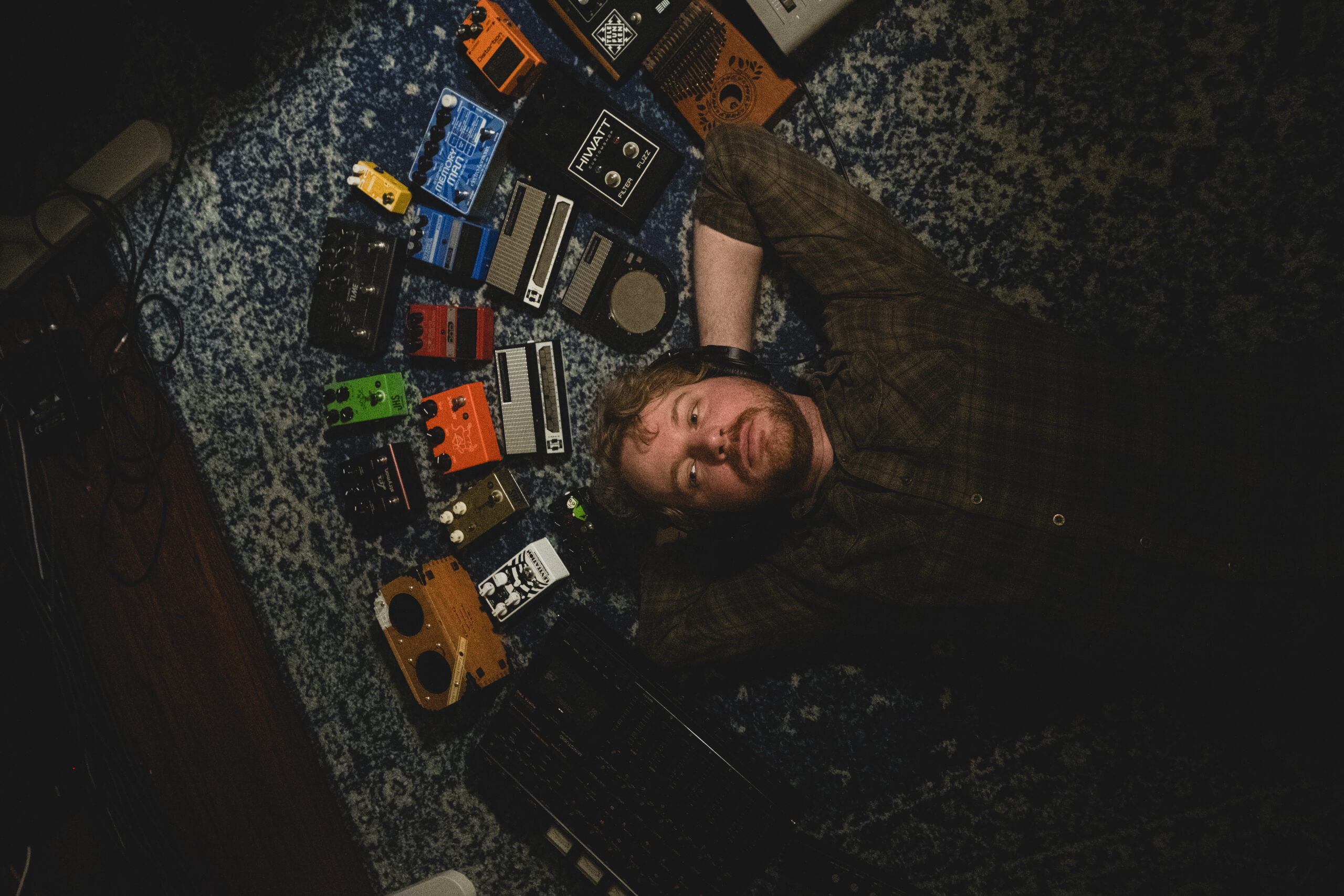
In an age of AI and ever-advancing technology, Andrew Ross still believes in the value of the authentic, tangible, and affecting.
Over the past few decades, entertainment, whether movies, TV, or music, has become increasingly dictated by corporate mechanics and algorithms. What were once thought of as pure artistic expressions, acts of creativity that took ambitious swings and hoped to find resonance with audiences through that authenticity, have instead become dominated by predictive technology and market testing tools.
To this end, artists within many of these fields have been hamstrung, being forced to sand down their edges and attempt to fit their square-shaped peg into whatever round-shaped hole that the industry might demand at a given moment. However, in just the past few years, there has been a sizable pushback against all of this, from artists and audiences alike. Consumers have begun flocking to physical media once more, like vinyl records, for the tactile opportunities they present. Now, Andrew Ross is striving to bring that same degree of authenticity to the new music he is creating.
Ross is the songwriter and producer behind Humdrum Book Club. For his new projects, the artist is using analog textures and genre experimentation, in a blatant rejection of algorithm-driven creativity. Ross is doing all of this for a simple reason: he is ambitious about building a more honest musical identity in a monotonous musical landscape.
The resentment that Ross harbors toward the algorithmically inclined tendencies within the modern-day music industry doesn’t come from a theoretical place; they come from first-hand experience. He spent years working as a ghostwriter and playing rhythm guitar for larger musical acts, and coming face-to-face with many of the industry’s most mechanical procedures within that time.
After several years of this, he decided it was time to branch out on his own and do what he had long wanted to do: become an artist whose music has a handmade, distinctly live quality. Ross moved to Los Angeles, built a studio in a shack on Venice Beach, and began focusing on his own music, which became known as Humdrum Book Club.
Today, Ross describes Humdrum Book Club as a form of resistance. His music is driven by what he refers to as “rage against a literal machine,” a reaction against social media pressure, influencer culture, and the burden of algorithms. Whereas other acts are utilizing advanced technology to record their tracks or even integrating AI-generated music into their workflows, Ross is busy going the opposite direction. Humdrum Book Club uses analog sound and “mid-fi” textures. He records to 1/4-inch tape or 4-track cassette, and is constantly aiming for a sound that is neither pristine nor intentionally degraded, but foggy, unpredictable, and authentic.
Beyond this, Ross is also vehement about making music without creative boundaries. While corporations and business professionals within the music industry are constantly espousing the value of artists staying within their own respective lanes and leaning into whatever labels they are being assigned, Ross refuses to limit his current work to just one genre. His music can, and often does, move from psychedelic rock to country western, with synthesizers becoming an increasingly important part of his sound.
Andrew Ross has new music releasing now, with Humdrum Book Club’s new single, “Sonuva Gun,” having just been released on April 28. Moving forward, he is ambitious about continuing to refine his authentic craft, and forge a musical identity for himself divorced from the algorithmically-engineered expectations of the modern day, and instead embrace the wild and liberated creativity of the past.
SPIN Magazine newsroom and editorial staff were not involved in the creation of this content.