Now Hear This is a monthly A&R column that provides you with exciting new sounds we discovered through the innovative new music discovery platform Groover.
Each month, you can expect a varied bouillabaisse of songs from a vast spectrum of artists from all over the globe, regardless of genre or geography.
For July, SPIN has selected 16 artists who deserve your attention, including the late night Ottowa hip-hop of AMG1K, the primitive postminimalism of aentsch, the Boston-born brutality of Execution Style, the wizardly studio pop of The Golden Hours, the sun-kissed LA pop of Chris Wills, the political rap-metal of Manic Wave, the microtonal math rock of Absorbance, the theatrical hard rock of Stefani Sikoa, the South London indie rock of Ferb, the big sky melodies of Bam Rigby, the desert-born alt-psych of Tarantula Bill, the Israeli-born Niv Snaggletooth’s authentic spin on American dustbowl rock, the bilingual alt-pop of Ariel Diaz, the lo-fi funk fantasia of Noah Lefgren, the old timey New York City gypsy rock of Victor V. Gurbo, and the nightlife synthwave of Nina & Radio Wolf.
Who knows, your next favorite act could just be a read away.

AMG1K
Sounds like: Prime grade hip-hop from Ottowa, Canada, with a distinctive spin on the kind of late night autotune hip-hop vibes pioneered by the likes of Drake and 808s-era Kanye.
Interview:
Describe your approach to music and how you would explain your sound to others.
I grew up in North Carolina, where I was exposed to a wide range of music, and that helped shape my approach as an artist. My music is inspired by how I feel and what I’m going through in real life. I would describe my sound as electrifying, infectious, and relatable. I try to give my listeners something they can feel, not just something they can hear. My approach is a mix of storytelling and emotion, with the goal of creating music that feels timeless.
How did you come up with the name of your act?
AMG comes from Mercedes and other luxury cars that I’ve always been a big fan of. The “1K” comes from the idea that people always say they “keep it 100,” but I try to keep it 900 more than that — so together, that makes 1K. That’s how AMG1K came together.
What are some artists and albums that have informed your creative direction?
Artists like Lil Durk, Drake and Travis Scott have influenced me because of the way they create and deliver their music. Some of the biggest albums that helped shape me are Travis Scott’s Days Before Rodeo, Drake’s Take Care, and Lil Durk’s The Voice. Those projects created a strong atmosphere and energy for listeners, while also giving fans timeless music they could connect with. That’s the type of feeling I want to bring into my own music.
What’s the most exciting thing happening in music right now?
I still consider myself part of the underground scene, so the most exciting thing for me is the opportunity to come up and make my music known to more people. There are so many artists building their own lane right now, and I’m excited to be part of that movement.
Where do you see the music world heading in the next five years?
Only time can really tell, but I think music is becoming more artist-driven. Artists are creating stronger identities and having more control over their sound, image, and connection with fans. I think this will help listeners connect with artists on a deeper level because people want to feel like they truly understand the person behind the music.
How is music helping you during these uncertain times?
Creating music reminds me that even when there are things in life I can’t control, music is one place where I can take that control back. It keeps me motivated and helps me connect with people who may be going through similar situations. Music gives me a way to express myself, tell my story, and turn my emotions into something others can relate to.

aentsch
Sounds like: A haunting combination of nature sounds, glitchy, experimental beats and abstract songwriting that falls somewhere between solo Kim Gordon and Mira Calix to these ears.
Interview:
Describe your approach to music and how you would explain your sound to others?
My approach to music is very primitive in a way. I never had a musical education. I’m learning by doing, completely. Music feels like a craft I never studied and like an extension of my inner world. It’s a vessel where things can leave my body and become something outside of me for a moment.
I approach it with a kind of fearlessness, or at least I try to. I am intimidated by music all the time, actually, but I try not to let that stop me. Most songs come out of a very intense emotional state. I’ll suddenly feel like something needs to get out immediately and then I sit down for eight hours straight and build a track almost obsessively. Usually I already know what sounds need to be in there before I even start.
My sound is very raw and rough. Completely unpolished. Sometimes even uncomfortable. Not only sonically, but emotionally too. The lyrics can feel exposing, almost unfair to put onto somebody else. But I think the music would exist anyway inside of me, so it has to land somewhere.
How did you come up with the name of your act?
“aentsch” is actually not something I invented for music. One of my best friends gave me that nickname around 25 years ago and I have used it ever since for almost everything that wasn’t my legal name. So it already felt very tied to me long before I started releasing music.
What are some artists and albums that have informed your creative direction?
Saya Gray has probably influenced me the most recently. I listen to all her records constantly. Lucrecia Dalt as well, all her records. And feeling completely blew me away living in Berlin. I couldn’t take my eyes off her. Her music feels physical somehow, like it goes directly into the bones and cracks things open.
I’m also very inspired by friends around me who work in sound design, DJing and production. And artists like Duval Timothy, especially the way he works with texture and space.
And Bowie always. I’ve been obsessed with David Bowie since I was very young. What inspires me most about him is his extremist openness and creative crazy conventional talent approach to just do things without trying to make himself fit into one coherent identity.
What’s the most exciting thing happening in music right now?
Honestly, I think the most exciting thing happening right now is musicians pushing back against this flood of empty AI-generated music that’s everywhere online now. I think it forces artists to become more distinct and more honest about who they actually are.
At the same time, there are so many incredible records coming out right now. It almost feels like the more artificial things become, the more people crave work that actually has a nervous system behind it.
Where do you see the music world heading in the next five years?
I think the divide between mainstream and independent music will become much sharper. A lot of mainstream music will probably be heavily AI-assisted or fully AI-generated eventually.
But I also think that will make independent music even more powerful because human-made work will become immediately recognizable. The imperfections, the risks, the weird decisions, the emotional inconsistencies, all of that will matter more and more.
How is music helping you during these uncertain times?
Music helps me survive, honestly.
I listen to the same records on repeat for months sometimes. The artists I mentioned before have basically lived inside my apartment for the last half year. For every emotion there’s a sound somewhere. For every strange thought there’s somebody who already found the perfect line for it.
And making music affects my nervous system in a very direct way. Sometimes I don’t even fully understand what I’m feeling until I start building a track around it.

Execution Style
Sounds like: Pure metal brutality from Boston that picks up where groups like Converge and Siege left off at the street level.
Interview:
Describe your approach to music and how you would explain your sound to others.
Well at our age we’ve all experienced more musical styles than we even knew existed when we were in our teens/twenties. We’re old enough to have lived through a time when there was no such thing as post hardcore, and that’s reflected in our approach to writing. Mostly we inadvertently (or deliberately) take bits from what we all like and smash it into music that’s a little more aggressive than the sum of its parts. Our guitarist Robin typically comes in with a series of riffs and acts as a conductor of sorts and gives us some insight as to what he heard in his head when he wrote the rough draft. He’ll point at me and say “that needs a Frank Bello thing on the bass” and I can translate that into something that works. Sometimes he’ll try to get Mike, our drummer, to play something specific, but Mike usually comes up with something even better. Chico came to us on day one with a notebook of lyrics and he has been a master at integrating his post apocalyptic vision into the short blasts of music we’re throwing out there. We usually tell people we sound like a brutal, nihilistic hardcore band.
How did you come up with the name of your act?
We must’ve thrown around 300 names before Execution Style. We were pretty stoked that it wasn’t already in use, so we rolled with it.
What are some artists and albums that have informed your creative direction?
TONS of metal and grindcore bands. Bolt Thrower, Siege, ISIS, Born Against, Rorschach. The classics: Black Flag, Negative Approach, Minor Threat. There’s also newer stuff like Black Breath who rule. We all have different tastes though. I like a lot of 80’s/90’s indie rock and hipster black metal. Robin loves a ton of obscure DIY punk and hardcore. Chico got his wings from AC/DC, a coat of steel armor from Judas Priest and inspiration from minor Threat, Cro-Mags and Agnostic Front. Mike is an enigma but he’s doing his best to find his sweet spot between Chuck Biscuits and Dave Lombardo.
What’s the most exciting thing happening in music right now?
There’s a band from South Africa called Twenty One Children that we all love and hope make it to the US soon. We’d love to play with them.
Where do you see the music world heading in the next five years?
If the Planet Earth still exists in five years, our hope is that artists will figure out a way to make a living that doesn’t involve sucking up to billion dollar corporations. With any luck, real artists will continue to reject AI and keep using their brains to create music, art and films.
How is music helping you during these uncertain times?
Good music is always gonna help whether times are certain or uncertain.
Making music and seeing live music is one of the only things keeping us grounded. Working with Benny Grotto (Mad Oak), Dan Randall (Mammoth Sound) and William Saunders (Fourth Media) has definitely helped get our foot in the door with this latest release. The fact that young people are still starting good bands is amazing. It’s also amazing to see marginalized people being accepted, defended and encouraged to get onstage, do their thing and kick ass.

The Golden Hours
Sounds like: Using such timeless artifacts as Hal Blaine’s drumkit, a Cooper Time Cube and an Echo Box, The Golden Hours beautifully blur the lines between the late 1960s and the mid-2020s with righteously fuzzy and hazy West Coast folk-rock that definitely sounds like guys who produced records for the Light in the Attic label.
Interview:
Describe your approach to music and how you would explain your sound
to others.
Patrick Cleary: My approach is informed by living in Los Angeles and the inspiration of the Sunset Strip in the golden years of rock and roll. At the go-go discotheques you’d hear fuzz guitar and electric 12-strings, raga rock, blues and folk all fused together — music as expansive as a West Coast sunset.
Bradley Stewart: The Golden Hours marked a real shift in how I write. I became obsessed with golden-era West Coast records, especially songs where the vocals feel communal — one shared voice instead of a frontman. Which is odd, because I’ve always been a standalone frontman. Since I’m a multi-instrumentalist, most songs begin life as detailed solo recordings that become blueprints for the band to expand on. Patrick works the same way, so we’re constantly building off each other’s ideas, sending elaborate recordings back and forth like a tennis match. My biggest role is usually shaping the vocal arrangements, especially the massive, stacked harmonies. That’s the heart of our sound: fuzzed-out folk rock wrapped in Byrds and Brian Wilson-style vocal layers. But we also like to go outside of that and explore raga-rock, cosmic country — wherever the song wants to go.
Hunter Lea: I’m always looking for good songs to record and I try to let the songs tell me where they want to go. I love to create a sonic world for myself and the listener to get lost in — lush layers, analog keyboards, trippy effects and hidden headphone candy. Working with Bradley and Patrick is inspiring, fun and easy. Each member brings something musically unique to the mix. I’d describe the sound as harmonious musical creation looking to the future while being inspired by the spirit of late 1960s studio creativity.
PC: “Mirrors” is a good example of how we work. Bradley delivered it to me nearly fully formed — organ, bass, drums, Mellotron, vocals — and I stripped it back to its bones, recording acoustic guitar, two tracks of lead guitar, bass and vocals, then sent it back. Brad retracked drums and other elements before it went to Hunter in Tacoma, who added his own instrumentation.
BS: Hunter wound up playing drums on the final version, plus upright bass, acoustic guitar, Wurlitzer, Fender Rhodes and Clavinet. My whole west coast songwriting journey really began with “City of Stars,” my love letter to LA — one of my favorite places. That was the first song where I attacked the vocals as a full four-part harmony, and I believe it was the first song of mine Patrick ever heard. I actually wrote “Mirrors” wanting to capture that same feeling again. The irony is that “City of Stars” wound up as the B-side. They were made for each other.
PC: Together our sound is dynamic and bright. We’re not afraid of the treble range or reverb. It’s harmonically rich because of the vocal stacks, dense arrangements and melodic content, but there’s a simplicity to the basic melodies and hooks. Someone called it psychedelic Americana. I wouldn’t say Americana exactly — but the three of us are American, and there’s definitely some British influence in the psychedelia.
How did you come up with the name of your act?
PC: I had a different idea initially, but Bradley had a thought pop into his head — The Golden Hours. He let me know and I said, “Yeah, that sounds great, can’t believe it’s not taken.” So we went with it. I won’t even mention the name I came up with that we abandoned.
What are some artists and albums that have informed your creative direction?
PC: Bradley and I connected as Byrds fans first. Mr. Tambourine Man, Turn! Turn! Turn!, Fifth Dimension, The Notorious Byrd Brothers — all of those inspired us. Garage rock is in my blood through The Unclaimed and The Sound Reasons, and I combined those elements in the second song we recorded, “Artificial Intelligence.” Bradley dug it immediately, played fuzz guitar on it, recorded great vocals and drums, and we were on our way.
BS: The Notorious Byrd Brothers is a constant inspiration because it goes way outside the boundaries of what people think folk rock is — it’s full of imagination. But my biggest priority is to sound like Bradley Stewart first and foremost. There’s no future in reliving the past. I love early Fleetwood Mac, early Bee Gees, all of the Wrecking Crew material — Nancy and Lee, The Monkees, The Mamas and the Papas, The Association. The Moody Blues have always been an influence. Serge Gainsbourg informs my songwriting, and I often think of AIR when I’m considering textures to add to a recording. Patrick and I have our own pedigrees, and The Golden Hours are a combination of our styles — something new. Then Hunter completes the trifecta using his vast collection of vintage instruments, including gear formerly owned by members of The Wrecking Crew.
HL: For this project specifically — The Byrds’ Notorious Byrd Brothers, JK’s Suddenly One Summer, Pride by David Axelrod, Nancy Sinatra and Lee Hazlewood, Gene Clark and The Beatles from Magical Mystery Tour through The White Album.
PC: On Brad’s song “Morning Comes, Morning Goes,” I recorded 12-string guitar and he recorded Mellotron — it reminded me of The Moody Blues. We call it The Byrdsy Blues.
What’s the most exciting thing happening in music right now?
BS: Rock and roll is relevant again, especially psych-oriented music. Vintage, far-out sounds are cool again — guitars, drums, actual bands everywhere, and we all find each other. I thank BJM, Allah-Las, The Black Angels, Ty Segall and White Fence for inspiring young bands to get weird.
HL: There are so many artists now who can record and release high quality work and find fans all over the world. The opportunities available to independent artists today simply didn’t exist a couple of decades ago. And creative tools — recording equipment, guitars, analog gear — have never been more affordable.
PC: We’ve recorded twenty-odd songs over the past year and our collaboration with Hunter has taken everything to another level, so we’re thrilled to finally be releasing music. Beyond that, I’m just happy to be playing with talented people across several genres and enjoying the variety Southern California has to offer.
Where do you see the music world heading in the next five years?
PC: It’s facing so many challenges — over 50,000 AI-generated tracks added to streaming services every day, a hollowing out of local scenes, a cost of living crisis squeezing both fans and artists, venues that never recovered from COVID-19. There are real shared struggles. But I’ve been doing alright in the LA scene, recording more than ever, and I plan on weathering whatever storms come. I’ll always have music as long as I don’t have to pawn my instruments.
BS: Patrick covered it well. There’s loads of noise out there, but the tides will turn. There are good people in this for the right reasons. Our label, Distant Shore, is putting out cool records because they genuinely want to share new sounds with the world and make artists’ lives easier. That’s how it’s supposed to work. The pay-to-play culture lets mediocre acts buy their way in while bands that actually deserve to be heard get drowned out. I’m sick of it.
HL: Regardless of how anyone feels about it, I think AI will play a big part in music over the next five years. I foresee two camps emerging — people diving into AI music, and another group going in the opposite direction, looking for something more organic: no click tracks, recording live, analog. I’m open to experimenting with new technologies, but so far AI has none of the fun of making music the old way. Music is fun — we really shouldn’t forget that. It would be sad for a generation of kids to never know the experience of playing an instrument, writing a song, forming a garage band, and discovering that joy for themselves.
How has music helped you during these uncertain times?
PC: It’s always been a balm for the soul. Getting joy out of playing, always learning, exploring new ideas and techniques — there are endless treasures to be found. The more you put into it, the more you get out of it. I prefer gatherings where people make their own homespun entertainment. Getting up close to music and being inspired by the people playing it — there’s nothing better. Music has gotten Americans through a lot of hard times.
BS: Music has always provided sanctuary from the noise of the outside world, and that’s more important to me than ever. I live to create. In a superficial world, it’s something real — and that never changes.
HL: One of my favorite things is making music and collaborating with friends. Recording songs and playing live helps me stay in the moment and takes my mind away from personal and existential stress.

Chris Wills
Sounds like: Vibrant Los Angeles-based, sunkissed folk-pop that radiates like Mirage-era Fleetwood Mac.
Interview:
Describe your approach to music and how you would explain your sound to others.
I try to live in a way where I can be in contact with the place where songs come from. Sometimes songs come and find you and sometimes you go looking. I have a voice, a perspective, that’s more important to me than narrowing myself within a particular sound. I like to change sounds.
How did you come up with the name of your act?
There’s a lot of smoke and mirrors in life that I don’t want to be a part of. The first step in living by that is by releasing music under my name, Chris Wills.
What are some artists and albums that have informed your creative direction?
I’ll stick with some influences that inspired my upcoming album. Ike and Tina Turner, The Cure, Cake, Perry Como, John Prine, Beck, to name a few.
What’s the most exciting thing happening in music right now?
My album I’m Sorry, Congratulations is out now.
Where do you see the music world heading in the next five years?
I hope it moves away from social media. My problem with social media is that creators and businesses aren’t given any transparency into how their algorithms work and as a result we are blindly chasing how to connect with people and we’re left guessing with our life’s work while trying to keep from going out of business. They are the ones succeeding and we are its peasants. We need to take control back and not operate in systems that systemically undermine and undervalue our work.
Additionally, I hope the music business can earn more money to go around, is less gatekeepy, and we can invest in new culture. What are the suits going to do when they’ve bought up all the legacy act’s publishing and there’s no more biopics to make? We have to invest in the future and create a sustainable landscape for artists.
How is music helping you during these uncertain times?
The act of writing, creating music, is my spiritual practice. It’s my religion. It always centers me.

Manic Wave
Sounds like: Urgent combination of rap-metal, post-hardcore and darkwave punctuated by an urgent message addressing the distressed state of American society.
Interview (by lyricist and composer George Hamelin):
Describe your approach to music and how you would explain your sound to others?
I’ve always approached music as a way of making sense of the world around me. Some people journal, some people go to therapy—I write songs. A lot of my music starts with a feeling I can’t quite explain and turns into an attempt to understand it. Whether it’s anxiety, hope, grief, love, or self-discovery, I’m trying to capture something honest.
Sonically, Manic Wave lives somewhere between alternative rock, indie rock, post-hardcore, and singer-songwriter storytelling. There are moments that are loud and chaotic, and others that are intimate and reflective. I care as much about the lyrics as I do the energy. If I had to describe it simply, I’d say it’s emotionally driven alternative rock for people who feel things deeply.
How did you come up with the name of your act?
The name Manic Wave comes from the idea that life moves in cycles. Emotions, relationships, creativity, success, failure—they all come and go in waves. I’ve experienced some extreme highs and lows in my life, and instead of trying to deny those experiences, I’ve learned to embrace them and channel them into art.
The name represents that constant motion. Sometimes the wave feels overwhelming. Sometimes it carries you somewhere beautiful. Either way, you have to learn how to ride it.
What are some artists and albums that have informed your creative direction?
My influences are all over the place, but the common thread is artists who are willing to be vulnerable and tell the truth.
A huge influence on my songwriting has been Conor Oberst and Bright Eyes. Albums like I’m Wide Awake, It’s Morning showed me that songs could be deeply personal while still connecting with a wide audience. Conor’s ability to turn messy human emotions into poetic storytelling has had a lasting impact on how I write lyrics.
I’m also heavily influenced by Taking Back Sunday. Their intensity, emotional honesty and ability to balance melody with raw energy helped shape my understanding of what alternative rock could be.
Other major influences include:
Twenty One Pilots
Radiohead
Muse
Modest Mouse
Rage Against the Machine
The Flaming Lips
I’m drawn to artists who take risks, build worlds around their music, and aren’t afraid to let people see who they really are.
What’s the most exciting thing happening in music right now?
The most exciting thing happening right now is that artists have more freedom than ever before. You don’t necessarily need a major label to build a meaningful career. Independent artists can connect directly with fans, tell their stories on their own terms, and build communities around shared values.
I think audiences are also craving authenticity. People are less interested in polished perfection and more interested in real human connection. That’s creating space for artists who have something genuine to say.
Where do you see the music world heading in the next five years?
I think we’re moving toward a future where artists are building ecosystems rather than just releasing songs. Music will remain the foundation, but artists will also be creating events, podcasts, content channels, merchandise, and communities that give fans more ways to connect.
At the same time, I think live music is going to become even more valuable. In a world that’s increasingly digital, people are looking for real experiences and real connections. The artists who create those experiences will have an advantage.
I also think we’ll continue to see independent artists competing on a level that would have been impossible ten years ago.
How is music helping you during these uncertain times?
Music gives me purpose.
There have been times in my life when things felt uncertain, overwhelming, or completely out of my control. Writing songs helps me process those experiences and find meaning in them. It allows me to turn difficult moments into something creative and hopefully something useful to someone else.
The older I get, the more I realize music isn’t just entertainment—it’s a way of connecting with people. When someone tells me a song helped them through something difficult, it reminds me why I started doing this in the first place.
Music has taught me that even our most personal struggles are often universal, and there’s something comforting about knowing we’re not carrying them alone.

Absorbance
Sounds like: Shapeshifting sonic polymath from Rome who creates microtonal electronic pop that can sound like Swans on one song, Joe Jackson on the other.
Interview:
Describe your approach to music and how you would explain your sound to others.
My approach is like that of a perpetual student, a curious researcher, and a composer who mixes experimentation with a kind of musical expressiveness that isn’t purely technical or self-indulgent. It is partially mathematical, logical and rational, and partially emotional (I preserved some improvisational guitar moments in the album). My curiosity drives me to explore new forms of musical language. The result is music which is sometimes not easily accessible, sometimes dissonant, while other times it follows a more recognizable melodic direction, without losing its oddness.
How did you come up with the name of your act?
I was looking for a new moniker for this project after making the decision to change the name of my previous solo work and move towards a gradually more experimental style.
Given my mathematical and cerebral approach to music, initially I couldn’t find the right name for this. Then, I had a kind of epiphany when a guy who was a training partner in my martial arts class told me about the phenomenon of light absorbance, and I was fascinated by both the concept and the name. I think it fits my musical style and my ideas.
What are some artists and albums that have informed your creative direction?
Well, there are a lot of names to add to this list, but I want to mention only the artists who have really given a direction to my musical path, those who have inspired me in music making. So, I should say King Crimson as forerunners of progressive/math rock, Captain Beefheart and his free and daring experimental albums, Zappa, especially for his dialogue with classical music, some punk/new wave acts like Devo, Magazine, Siouxie, Wire and, obviously, Talking Heads. The great guitar orchestral pieces of Glenn Branca with that unique sharp sound or Tuxedomoon and their great Half Mute album. Then the impressive post rock by Slint, the math rock dynamics of Don Caballero. Regarding microtonality I can briefly mention the great Charles Ives, who since the early years of the 20th century experimented with quarter tones in classical music, the equally great Henry Partch who built new instruments for his microtonal scales and I can’t leave out “old” microtonality with the great example of baroque artist Nicola Vicentino, who already theorized a 31-tone system in the 16th century and somehow inspired my personal use of some 31-tone musical sections in my album.
What’s the most exciting thing happening in music right now?
I have to admit that the breakthrough of the 24-tone math rock played by Angine De Poitrine really surprised me to the point that it forced me to release my album which had been in the works for four years but was in a dormant state for a long time, and I wasn’t even sure if I should publish it. So there are still great discoveries that inspire you to make you come out of your own den, and at the same time, push you forward with your musical style. I recently appreciated My New Band Believe, but there are also many interesting musicians especially in the electronic music field, I like those who experiment microtones like Brendan Byrnes, or the sound explorations of Sunik Kim. Finally I have to mention the great work of my fellow Italian artist Angelo M. Farro, who is doing great in merging contemporary music, sampling, noise and field recording.
Where do you see the music world heading in the next five years?
I could reply with a partially playful answer that there will be a strong growth in the sale of microtonal instruments, but maybe it is a just realistic prediction. I am sure that music has to evolve from the standard tuning system and explore different sound pitches. I already see that new artists are going in this direction and it will likely occur more so in the future. Hoping that AI will not steal the show.
How is music helping you during these uncertain times?
My personal opinion, or better, my personal taste, is that music has to bring a certain intellectual depth or constructive irony and can convey profound messages and offer deep reflections on contemporary society. I want to use music as a laboratory of ideas that bears witness to the evolving times, and for me this is the only true reason to continue to make music because as I don’t like superficiality in general, I can’t find relief in making empty music. For me, this is a continuous pursuit of new musical solutions; it is helpful and somehow self-healing, especially in difficult times.

Stefani Sikora
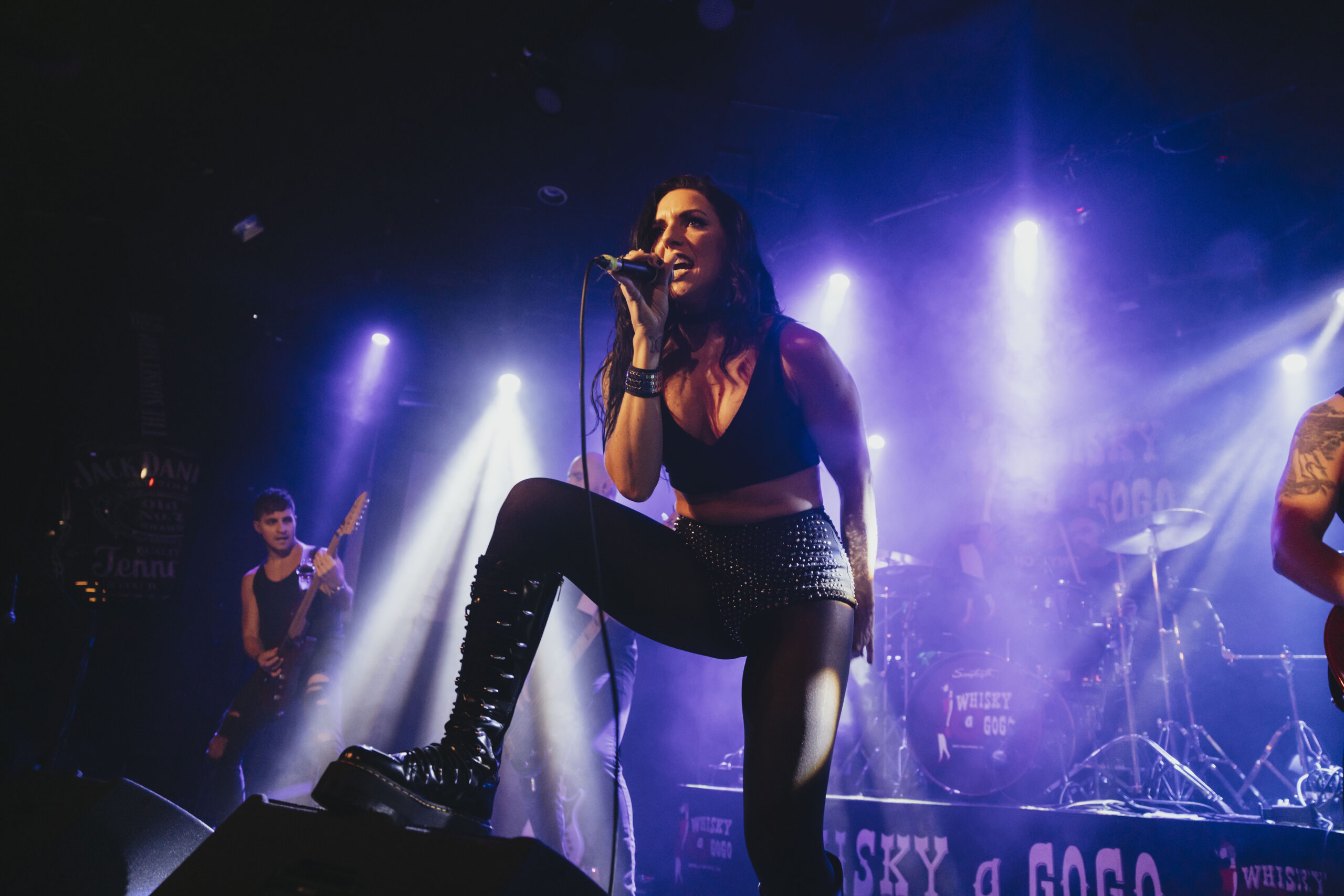
Sounds like: Powerful, theatrical alt-metal from Los Angeles that sounds like Halestorm backing up Lady Gaga.
Interview:
Describe your approach to music and how you would explain your sound to others.
You’re really making me think and analyze myself here…I like it! My approach to music is a collaboration with the flow of energy I feel coming to me. Inspiration strikes in unexpected places – in the shower, on a run, or it could be anywhere. Often lyrics and melody come to me already synced together. I suddenly hear a melody paired with a phrase that gets into my head and goes around on repeat. Other elements drop in, and then I grab on and start to shape it into a song. It will bring up a powerful feeling in me which I then have to get out, to express in a heightened, artistic way.
My sound is a heavy hard rock/metal construction to carry the emotional and dramatic vibe of my music (always dramatic and theatrical with me!) and then, perhaps a little different from some other women in the genre, a powerful clean vocal, with just enough grit and growl to keep it fierce. For me, the combination feels fresh and visceral, while my song style carries a bit of nostalgia in structure. It took many years to arrive at my sound, and now it drives me and the music. This style of music is such a blast to create and perform!
How did you come up with the name of your act?
Sikora is an old family name that I chose to adopt as my stage name (Polish, from my paternal side), and my dad suggested changing the spelling of my first name to Stefani, as it’s a bit more rock and roll.
What are some artists and albums that have informed your creative direction?
When I first heard “Bring Me To Life” by Evanescence, I was immediately a fan. I had never heard anything like it. The heavy musical elements paired with Amy Lee’s gorgeous vocal is truly something special. The entire Fallen album blew me away and has been a major inspiration for me.
In This Moment has such a cool, unique sound, and I really connect with their aesthetic. I love Maria Brink’s vocal style. My favorite albums of theirs are Black Widow, Blood and Ritual.
I’ve always been a huge fan of Ozzy Osbourne, from Black Sabbath through his solo career. His theatricality and commitment to unapologetically being himself were unparalleled. What a badass — we all miss him, but his legacy and inspiration live on forever. His Blizzard of Ozz and Diary of a Madman albums are the best.
Nothing More is a newer discovery for me. My producer Steve Ornest introduced me to them, and I was instantly hooked on their dynamic style. I caught their show at the Belasco in downtown LA earlier this year. Their lead singer, Jonny Hawkins, had food poisoning earlier that day, but he still went onstage and killed it. His commitment to putting on a great show and dedication to his fans were awe-inspiring. I love their albums The Stories We Tell Ourselves and Carnal.
Papa Roach has been a favorite band of mine for years. They keep consistently releasing incredible music. Several years ago, when I was on the verge of discovering who I truly am as an artist, I saw Papa Roach perform at the House of Blues in Anaheim. I’ve seen them several times, but this particular performance had such a profound emotional impact on me, that afterwards I was in tears, and I said, “I want to do THAT!” Thanks Jacoby and crew, for inspiring me to want to write rock/metal songs and really let loose on stage!
What’s the most exciting thing happening in music right now?
I love the blending of genres and sounds, fresh and new, emerging and evolving from the roots and pioneers of hard rock and metal. Finding new and exciting artists has never been easier! Another exciting thing is the amount of collaboration between artists in and out of their genre. I love to see (and hear!) the global village of musicians and artists getting together to do something new, fun and exciting — really cool music coming from those get-togethers where everyone is just about the song and making it great!
Where do you see the music world heading in the next five years?
I believe it will continue to trend in the direction of live performance and experience. With all of the dramatic changes streaming has brought to music, it is so important for artists to get out there and perform live and give fans that full-throttle experience from the live show. Post-COVID, the number of concerts and festivals has literally exploded, and rightfully so! Every band is getting out there playing live. In a world that’s moving toward AI, where it’s hard to know what’s real or not real, holograms of artists, and all the wild tech things that are happening, it’s a big positive to see artists bringing themselves and their music, creating awesome shows for their fans. This experience cannot be duplicated, fabricated, or phoned-in. The exchange of energy between artist and audience is powerful, unmistakable and unforgettable.
How is music helping you during these uncertain times?
Music is my anchor. Creative expression is the best therapy in existence. Singing, writing songs, playing my piano and guitar, recording in the studio, and performing on stage are all things that instantly elevate my mood, no matter what is going on in my life or in the world around me. Connecting with others through my art is so richly fulfilling, and collaborating with amazing musicians brings me so much joy! I feel so grateful for the opportunity to give my listeners something to connect with that will hopefully inspire them in some way. I want to help empower others to live their best lives and follow their biggest dreams. We only have this moment right now — I’m making it the best I can!

Ferb
Sounds like: South West London-born indie rock that builds like Radiohead circa The Bends but with more of a plaintive, more folk-rooted approach.
Interview:
Describe your approach to music and how you would explain your sound to others.
“Our approach is pretty much a big melting pot of all angles of alternative rock. We’ve channelled a lot of American, particularly New York, energy in how we perform and in the guitar playing. It’s a lot of post-punk, post-hardcore and midwest emo, but at our noisiest we’ve been compared to shoegaze bands of past and present, which makes us cool I guess.” – Harley, frontman
How did you come up with the name of your act?
“It was a drunken suggestion by me, a matter of days before our first ever gig. Most people would be able to figure out where the name was pulled from, and it is very ridiculous.” – Harley
What are some artists and albums that have informed your creative direction?
“Been Stellar’s first record was huge for us” Tom, the bassist, said. “Definitely shaped our production style whilst making our EP, to capture a bit more of a live sound.”
“Title Fight’s energy has resonated a lot for us.” – Joel, the drummer, said. “Our producer Arthur put me onto Floral Green, that’s been in constant rotation for me for a minute now.”
“Someone told us we sounded like Rival Schools at a gig a few months back, I’ve not looked back on them since.” – Harley
What’s the most exciting thing happening in music right now?
“Something’s in the air in London right now” – Joel
“Guitar music is flourishing quite hard right now,” said Tom. “There’s so much to be inspired by and it gives us a lot of hope.”
Where do you see the music world heading in the next five years?
“Hopefully not with our jobs getting taken over by robots,” said Harley. “The personal connection so many of these new bands are tapping into right now seems to be highlighting human emotion more than ever so the prospect of that being at the forefront of music is really exciting.”
Joel – “Ferb headlining Glasto. That’s it.”

Bam Rigby
Sounds like: Big sky rock recorded in New York City that soars like 2000s-era U2 against the pulse of Manhattan’s bustling energy.
Interview:
Describe your approach to music and how you would explain your sound to others.
I’m a beatnik at heart, so my approach to music is all about capturing unvarnished moments. My sound is a vintage Polaroid coming into focus — it’s modern storytelling wrapped in a thick, warm blanket of 70s analog sound. I try to bypass digital shortcuts, record with live instruments, and run everything through real analog gear. I want you to hear the physical room, the dust on the amps, and the human heartbeat behind the rhythm. It’s music meant to be felt, not just streamed.
How did you come up with the name of your act?
It’s actually a mix of a funny accident and an homage to my mother. My real last name is Tachibana, but a friend of mine used to constantly mispronounce it as “Tachibam.” Eventually, that just got shortened to the nickname “Bam.”
The “Rigby” part comes from my mother. She was in a rock band when I was growing up, and her absolute favourite song to sing at her shows was “Eleanor Rigby” by The Beatles. Putting the two together just felt right — it’s a nod to my own roots and a tribute to the woman who first showed me what it’s like to be on stage.
What are some artists and albums that have informed your creative direction?
My sonic DNA is really just a gumbo of eras. I love the undeniable vocal swagger from Elvis Presley’s early days and the explosive energy of The Who. I listen to the Who’s first album (My Generation) daily.
I’m also wicked inspired by Marc Bolan (T.Rex), and the psychedelic… folky… storytelling of Donovan.
…And anything by The Beatles. Their early more skiffle sounding records and the contrast of Sargent Peppers is really a masterclass in reinvention and creativity.
What’s the most exciting thing happening in music right now?
I’m noticing this kind of grassroots rebellion against the algorithm. We’re seeing a massive rise in analog “listening bars” and underground vinyl clubs popping up from Brooklyn to Tokyo. People are getting tired of being spoon-fed 15-second viral clips; they want to sit in a room with strangers, touch a record, and actually listen to a full album front to back. It feels like a renaissance of intentional listening. As an analog guy, seeing people crave that tangible, immersive audio experience again makes me feel… validated.
Where do you see the music world heading in the next five years?
Look, we’re standing in the middle of a tidal wave of AI-generated music, synthetic voices and hyper-digital curation. Over the next five years, the internet is only going to get louder and more saturated with that artificial content. But I truly believe that’s going to trigger a massive rubber-band effect. Like… the more artificial the digital world gets, the more people are going to crave bruised knuckles, out-of-tune guitars, and real sweat and tears. I truly hope and believe that the future of music is going to pivot hard back to undeniable authenticity—artists getting in a van, playing intimate live shows, and creating real, tangible communities in person again. Go. Outside. People.
How is music helping you during these uncertain times?
The world feels like it’s spinning off its axis right now—between weird uses of tech, economic whiplash, and just the noise of everyday life… Music is my anchor. When the headlines get too heavy, stepping into a studio, plugging in, and feeling the physical vibration of a chord is the ultimate grounding mechanism. It cuts through for me. It’s the one space where I don’t have to have all the answers and I can just be honest and in the moment.

Tarantula Bill
Sounds like: Desert-born psychedelic alt-rock reminiscent of the Meat Puppets back when they signed to London Records in the early ’90s.
Interview (Answers by Kendon McGehee):
Describe your approach to music and how you would explain your sound to others.
I play a bunch of instruments and if I find myself getting haunted by the same riff, melody, theme, or lyrical idea, I commit to completing it as a song, even if it may never be released. My aim is to sprinkle in my experiences, in hopes that the music can meet someone wherever they are at, just as music I’ve enjoyed has met me in just the right state.
Sonically, Tarantula Bill ranges from heavy phased-out guitar riffs to softer synth-led bedroom pop to the occasional manic jam. Though I’d say the genre we operate under is neo-psych-rock, the genre itself casts a very wide net. I’ve found I get bored at shows that sound the exact same the whole way through, so I create under a pretty open premise — if it feels right, it is right. If you’ve been to a King Gizzard show, you know what I’m talking about.
How did you come up with the name of your act?
I’ve always hated creating band names and often find the process painstaking and embarrassing. I knew a name would eventually be required if a band were to form from the recordings I’d been working on and that thought loomed over me. I just asked the universe to give me a sign, and sure enough, it did (literally). There is a pool hall in downtown Denver called Tarantula Billiards, and occasionally the neon sign would malfunction. One evening, I was driving past and the sign read ‘Tarantula Bill’ and it just clicked. It was so fitting. It created this ambiguous and expansive character in my head, which is what I appreciate so much about the genre. I’ve never second-guessed it.
What are some artists and albums that have informed your creative direction?
I feel like saying Tame Impala is such a cop-out of an answer because so many bands say that and sound remotely nothing like Tame, but I’d be outright lying if I said anything was a bigger influence than Innerspeaker or Lonerism. I was in the throes of trying to be a better guitar player by studying and playing the blues, and I have always loved psych rock from the ’60s and ’70s, but struggled with the idea it was in the past and not coming back in any fashion. Those albums bridged this gap in my brain that not only was this genre not dead, it was underexplored, and it made me want to dig more out of it. Those albums also expressed this freedom to push boundaries and create what feels right without being confined, and I feel the same could be said about the other massive Tarantula Bill influences, The Flaming Lips and Beck.
What’s the most exciting thing happening in music right now?
To be honest, it’s a bit daunting out there right now. A lot of artists are canceling tours (likely because of the associated heightened costs), smaller independently owned venues are seemingly losing the battle to the monopolized industry players, and AI is being force-fed as a “must-use” tool for what, to me, is supposed to be a deeply personal and felt experience of creating. It’s a bit bleak, but historically, it’s in times like these when some of the most beautiful and inspiring art is created. I’m hopeful that these conditions are sharpening a rebellious edge for artists, and I fully believe they’ll have the opportunity to deliver it.
Where do you see the music world heading in the next five years?
I think some of these things we’ve already started to see, but I’d love to see more independent festivals, more physical media, and DIY show events. They all bring the coolest artists together, and make music scenes feel like more of a community than a means to an end. That may also be just what we enjoy most as a band at the moment, but I’m hopeful for it!
How is music helping you during these uncertain times?
The same way it always has. It’s always been the best way to vent – whether that is playing an instrument too loud, or creating something that digs out the mood you are in. Putting it all out there is an awesome release. It’s also one of those things where you can achieve the same feeling by just listening.

Niv Snaggletooth
Sounds like: An Israeli-born spin on bluesy, folky American dustbowl rock from a GG Allin-quoting, Los Lobos-covering hombre with road dust in his bones.
Interview:
Describe your approach to music and how you would explain your sound to others.
I’m still very much a metal musician at heart-so I approach country music with that exact same discipline. For me, music has to be confrontational and spiritual-it should challenge the listener.
I want to show that country music doesn’t have to be superficial and trite-it can be an experience that has weight and grit to it.
How did you come up with the name of your act?
My actual name is Niv, which has a couple of meanings in Hebrew — one of them being “fangs” — and I have a Motörhead tattoo backpiece with the Snaggletooth mascot. It just felt right to choose something that bridges my identity like that.
What are some artists and albums that have informed your creative direction?
16 Horsepower – Sackcloth ‘n’ Ashes
Days of the New – Yellow
Mötley Crüe – Too Fast for Love
Lynyrd Skynyrd – (pronounced ‘lĕh-‘nérd ‘skin-‘nérd)
ZZ Top – Degüello
GG Allin – Carnival of Excess
Hank Williams, Jr. – Whiskey Bent and Hell Bound
David Allan Coe – Longhaired Redneck
Leonard Cohen – Death of a Ladies’ Man
Howlin’ Wolf – The Howlin’ Wolf Album
What’s the most exciting thing happening in music right now?
On the country side, I’m devastated that Wheeler Walker Jr. is calling it quits. That guy is the best thing to happen to the genre in the last decade!
On the metal side, there’s so many bands in the underground scene I want to shout out it’ll be impossible to pick just one, I’ll just say extreme metal is alive and well, despite what naysayers will have you believe!
Where do you see the music world heading in the next five years?
I’m concerned by the way A.I is advancing and how it’s flooding the music space with generated content. Whenever I see a band use A.I for their cover art, 9 out of 10 times I just refuse to listen to it.
We’re gonna see more watered-down music and lyrics in the coming years if people don’t come to their senses and realize how hollow it makes the end product sound.
How is music helping you during these uncertain times?
The last three years of living through a war and a political madhouse have been difficult to say the least, especially when you’re opposed to the actions of the state you live in.
Music is the only thing keeping me grounded-it helps to vent the anger and grief I feel.

Ariel Diaz
Photo: Attached
Sounds like: Classic New York blend of Spanish Harlem and the Lower East Side coming together to create a bilingual spin on the genre-hopping progressive pop of The 1975 and Harry Styles.
Interview:
Describe your approach to music and how you would explain your sound to others.
I like to think my approach to music is twofold. When writing a song, I do my best to be as true to me as I can be even if my inner critic is telling me it’s too cheesy or possibly formulaic. But on the other hand, I also like to think about how I can take a song one step further and surprise myself in some way.
I almost always start with just one melody. Then one becomes two, two becomes three, then eventually I’m able to hum a chorus. I do the same for the whole song and then I’m ready to plug in lyrics based on what I feel the melody is meant to communicate. I do my best to add guitar chords before forwarding the demo to one of my producers to build out the instrumental.
And I think the way I’d explain my POV is as if Bad Bunny picked up a guitar and joined The Smiths. (See? Cheesy but it’s honest.)
How did you come up with the name of your act?
“Ariel” is actually my middle name. Since I knew I’d be releasing music for both English and Spanish speaking audiences, I wanted a name that moved easily between both worlds. “Jeremy” doesn’t quite roll off the tongue the same way in Spanish. I also liked the idea of having an androgynous stage name. Subverting expectations if you will.
What are some artists and albums that have informed your creative direction?
Jeff Buckley’s Grace is in my DNA. It’s the perfect showcase of a masculinity that’s vulnerable, longing and approachable but still raw. The Clash’s London Calling reminds me that subtlety is for chumps, especially when it comes to music with a message. And let’s also throw in Moby’s Play for teaching me that electronic sounds are equally as pure as traditional instruments.
What’s the most exciting thing happening in music right now?
What excites me most right now is how artists are refusing to treat genre like a border, especially in Latin music. For example, Planta Industrial, a latin punk new wave duo from The Bronx, are on my radar as dudes whose energy, momentum and ingenuity feel like a beacon. Like, they made a punk bachata song this year… Who on earth would’ve thought that? I wish I did! And in terms of identity, they so beautifully represent the breadth of Dominican guys from NYC – they got the street swag but also have a little emo kid that lives inside them.
Where do you see the music world heading in the next five years?
I see a battle for the soul of music and art. This AI shit is getting out of hand. But I foresee more artists, such as myself, throwing our hats in the ring. I’ll be damned if I see a bot live out my dream before I give it a fighting chance. So here’s to hoping my humble little songs pack enough of a punch.
How is music helping you during these uncertain times?
Music has reminded me I’m not as helpless as I feel. I wrote my first song the day Zohran Mamdani won the NYC mayoral primary last year. (Got Me Fucked Up was my second song ever written within a few days of that.) When I saw that meaningful change was still possible despite the odds, I so desperately wanted to use my voice to make a difference. I was and still am an amateur guitar player, but it was enough to empower me. As long as there’s something to fight for, I’ll be writing.

Noah Lefgren
Sounds like: This sounds completely homespun and lo-fi yet thumps with such assertiveness that you could hear it blasting in the club that still plays pure funk. Total Bootsy vibes!
Interview:
Describe your approach to music and how you would explain your sound to others.
I have this obsessive approach to creation; I am always playing around with ideas and new sounds and have this instinctive need to make music. For this latest album, Aimo Rimbaud And The Family Outfit, I would start with the instrumental and then write to that, usually melody before lyrics. I also tend to prioritize sound and atmosphere over lyrical content, following in the tradition of my favorite albums (Sly & The Family Stone’s There’s A Riot Goin’ On, The Rolling Stones’ Exile On Main St., D’Angelo’s Voodoo), hence the lower-mixed vocals and dense sound on my project.
My sound, at least on Aimo Rimbaud And The Family Outfit, sits somewhere on some plane between Prince’s 1999, Frank Ocean’s Blonde, and Steve Lacy’s Apollo XXI. I borrowed some from Kanye West’s 808s & Heartbreak too. On my song “The Deal”, I wanted to channel some energy from the late 70s – early 80s New York no wave scene with a saxophone solo partly inspired by James Chance (performed by my good friend and the greatest saxophone player I know, Bryn Ripley). The Minneapolis sound was the biggest inspiration though for sure.
How did you come up with the name of your act?
I had a solo project for a few years called Le Country Club. It was fun having some alter ego sort of thing, but for this album I wanted to release it under my real name, Noah Lefgren. Kind of just embracing who I am, and building on that further in some way too I guess.
What are some artists and albums that have informed your creative direction?
I guess I already mentioned some but Prince for sure, I love Sly & The Family Stone, Kanye West. James Jamerson, the Motown session bassist, informed a lot of my sense of low-end counterpoint and interplay with the rest of the arrangement. Sly Stone is the Bible, though. That man taught me everything through his music. The whole DIY approach to creation, furthered by Prince; the combination of organic and synthesized elements in the mix; everything he did was so cool to me musically. Sly Stone’s album Fresh is sort of scripture to me for sure.
What’s the most exciting thing happening in music right now?
I think the accessibility and democratization of the industry is so cool. Both in terms of creation and getting your work out to people. I made most of this album by myself, with the only exception being the saxophone solo by Bryn Ripley on “The Deal”, and put it out without a label or anything. Anybody can really do anything themselves at very little cost, and I love that so much. I also live in Orem, Utah and just recently co-produced a cover of the Naughty Boy and Sam Smith song “La La La” for the London-based artist James Cope; 30 years ago, there’s no way I could’ve done that from the intermountain west in the United States for a guy in the UK. Insane how that works.
Where do you see the music world heading in the next five years?
I could see a rise in both very distinct individuality between artists and super cohesive regional scenes being big. You already have that now to some extent, with people being unapologetically themselves in their bedroom in Omaha, Nebraska making the coolest stuff you’ve ever heard and then some very defined sounds coming from specific places, like the post-Brexit post punk stuff that’s been coming out over the past few years. Cool stuff to see for sure.
How is music helping you during these uncertain times?
It’s all I really know how to do. Creation is sort of a form of escape for me, so it’s very much been therapy to some extent. It keeps me sane for sure.

Victor V. Gurbo
Sounds like: A scrappier, more feral spin on Eastern European-flavored New York City folk-rock that fans of groups like Firewater and Gogol Bordello would totally appreciate.
Interview:
Describe your approach to music and how you would explain your sound to others.
My sound falls somewhere between “singer-songwriter,” “folk,” and when I’m performing with an electric ensemble, “folk rock” or “Americana.” I gravitate toward these genres because they allow for a great deal of creative freedom without locking an artist into a rigid sound. Americana draws from so many influences that I can comfortably include a country song, a blues song, and a rock song on the same album without it feeling out of place. Ultimately, I’m a songwriter with a strong emphasis on lyrics, so my approach is to shape the music in whatever way best supports the piece I’ve written.
How did you come up with the name of your act?
I originally tried to form bands in college with other artists and collaborators, but no one was quite as serious about pursuing it as I was. So I decided to move forward on my own name. Using my name with “& Company” creates an umbrella that allows me to collaborate with different musicians without needing to rebrand every time the lineup changes.
What are some artists and albums that have informed your creative direction?
I’m a huge Bob Dylan fan. Many of his albums are, for the most part, performed live in the studio – recordings that capture real performances. In today’s climate, with the pervasiveness of AI and increasingly polished studio production, I’ve leaned into releasing home recordings and, in this case, a live album recorded at one of the first venues Dylan performed at after arriving in New York City.
What’s the most exciting thing happening in music right now?
While the internet is incredibly saturated with new music, it’s also one of the most democratic times to be a musician. Technology is more accessible and affordable than ever, and no longer gate-kept by major labels. This has allowed independent artists and small labels to gain real traction. You can open any social media app, search for new music, and immediately find something exciting — it’s an inspiring moment.
Where do you see the music world heading in the next five years?
I think there will be a strong pushback against AI in the arts, with a renewed emphasis on supporting human authorship and performance. AI has its place in computation, but not in creative fields. We’re already starting to see cracks in the current wave, and I believe artists and audiences alike will continue to push back and embrace what makes us uniquely human – our ability to create and express.
How is music helping you during these uncertain times?
Music isn’t just a tool to soothe during uncertain times – it’s also a vehicle for change. There’s a renewed wave of protest music and a re-exploration of socially conscious work from the past. I recently had the honor of being selected as a finalist in the “When Voices Rise Songwriting Contest,” and I’ll be featured alongside the other finalists and winners at “When Voices Rise: A New Generation of Protest Music” at Joe’s Pub on August 21st. I highly recommend listening to the finalists – you’d be amazed at how artists are able to process uncertain times and transform them into a force for change.

Nina & Radio Wolf
Sounds like: Night vision neon pop from visionary producer Radio Wolf and the woman people on YouTube are calling the “Queen of Synthwave.”
Interview:
Describe your approach to music and how you would explain your sound to others?
NINA: We’re drawn to sounds and lyrics that invoke a nocturnal, romantic atmosphere that is emotionally timeless and often feels very cinematic. We want our music to be transportive—an escape from the everyday—like a dream run wild. A song may start with a narrative idea or theme from either of us inspired by a photograph, film or dream. Or sometimes it starts with a guitar riff from Radio Wolf or a melody in his head that sparks a certain mood.
In general, our aim is to create songs that feel like long-lost classics and give our sound a cosmic, electronic rock feel—with the vocals and guitars colliding with synth-electronics.
Radio Wolf: It’s our “jukebox spirit ethos.” The songs could stand alone as “singles” but they’re really part of a much broader musical universe, intended to inspire transcendence in listeners. We work mostly at night, which adds that moonlight escapist aura to our process, invoking a dark romance in our writing. Sonic contrast is key; for instance, the production might counterpoint a soft, haunting vocal by NINA with a fusion of brash guitar-driven rock n roll, dark atmospheric synth pulses and experimental SFX — a kind of sonic collision. We break free from specific genre confinement, echoing the past and merging it with how we hear the future.
How did you come up with the name of your act?
NINA: We each had our own names as acts before we teamed up on this project so we simply put the two names together: NINA with Radio Wolf.
This seems to make sense as we record music individually as well, though the plan is to keep this creative partnership going and evolve JUKEBOX DREAM into a larger sonic world.
What are some artists and albums that have informed your creative direction?
Radio Wolf: We’re both inspired by artists who create mystery, desire, ambience and intensity in their music, whatever the genre, so it’s a wide spectrum. These ingredients can be found in the early blues of Robert Johnson, the rock ’n’ roll of Chuck Berry, and right up through U2 (particularly Achtung Baby), Tangerine Dream (Near Dark soundtrack), Portishead (Dummy), The Raveonettes (In and Out of Control, which has an interesting guitar sound that blends ’50s/’60s rock ’n’ roll with a more modern grungy/noisy art-rock sound). Then there’s the late, dark romantic maestro Angelo Badalamenti (Twin Peaks score).
NINA: The visual arts have also played a huge role in shaping our creative instincts. We’re drawn to imagery that feels darkly romantic, seductive and dreamlike—by artist-filmmakers like David Lynch and Mario Bava for example, or photographers like Helmut Newton. So, as well as music artists, visual artists like these inspired the sensual danger, noir mystique and wild-at-heart spirit we were after in JUKEBOX DREAM.
Musically, I’m a huge The Doors fan. Jim Morrison’s brash, rebellious spirit and stage presence had a huge impact on me when I was a teenager; the band’s music still has the power to transport me. Kim Wilde was also a very early influence and still inspires. Bands like Chromatics, Desire and Goldfrapp are up there for me too. But these are just a few.
What’s the most exciting thing happening in music right now?
NINA: The independent music scene is where the excitement is right now. The artists we connect with are pushing boundaries and trusting their vision without trying to fit in. We share the same ‘genre-free’ attitude and we’re loving it. No rules. You can create your own world and your audience finds you. It’s a very honest connection.
Radio Wolf: Artists creating immersive worlds are paving the way. The genuine energy and strong individual artistic identity emerging from the independent underground is exciting. We want to see and hear more art that carries this forward and makes us feel more alive.
Where do you see the music world heading in the next five years?
NINA: We don’t concern ourselves too much with music trends or who’s doing what because we have our own territory to explore. We concentrate on being hands-on, writing better songs, creating vast musical worlds and memorable experiences with our audience. I see a lot of experimentation and dirtying up our sound a little. Uncut, unrated… Why not?
Radio Wolf: It feels like there’s a real hunger — artists and listeners want to connect with something more raw and distinctly human. Authenticity, whether it’s now or five years from now. The connection can be through a resurgence in a genre like rock, folk or jazz… whatever. The idea of jamming and being really inventive with instruments is key. Even electronic music can imbue the human touch because the artist will take risks. Unfamiliar sounds, genre-fusing, craft, imagination and a sense of release.
How is music helping you during these uncertain times?
NINA: All the complex, sometimes overwhelming things happening day after day can really get inside your head and mute your enthusiasm. Writing or listening to a song can subvert these anxieties and create feelings that elevate you, taking you somewhere you need to be — even if only briefly. Music is the one constant we can grab onto and rely on.
Radio Wolf: That need to break free and find a new space exists in all of us. Life can get really tough and, even in times when we’re supposedly constantly connected, people can still drift into isolation, feeling alone and trapped. Music is the great escape to a better place — and sometimes we call that place home.
Groover connects independent artists with music industry professionals to accelerate their careers. Their goal is to empower independent artists by providing a platform that connects them with the best curators, radio, media, labels and other music pros to receive guaranteed feedback and exposure.
Over 700,000 artists use Groover to connect with 3,000+ professionals across the globe. Artists have received over 7M+ pieces of feedback, 1M+ shares (e.g. playlists, reviews) and 1,500+ label contracts — all thanks to Groover!